
Element of Fire
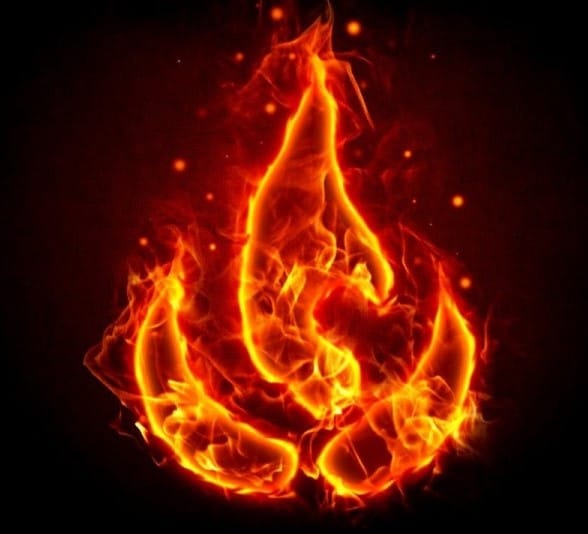
What is fire?
Let’s start with the dictionary: the state in which a combustible substance produces heat, light, and smoke through burning.
Fire is one of the possible outcomes of combustion.
(Possible Question 1: Can there be combustion without fire? Yes. We’ll get to examples in a moment.)
Not every combustion creates fire, but for fire to exist, combustion is necessary.
So, what does combustion require?
First, there has to be something that burns. For example: in a gas stove, it’s the gas; on a barbecue, it’s charcoal; in a car, it’s gasoline. If there’s nothing that can burn, there’s no combustion 🙂
But having fuel alone isn’t enough. Combustion also requires air — more precisely, oxygen. Without oxygen, there’s no combustion.
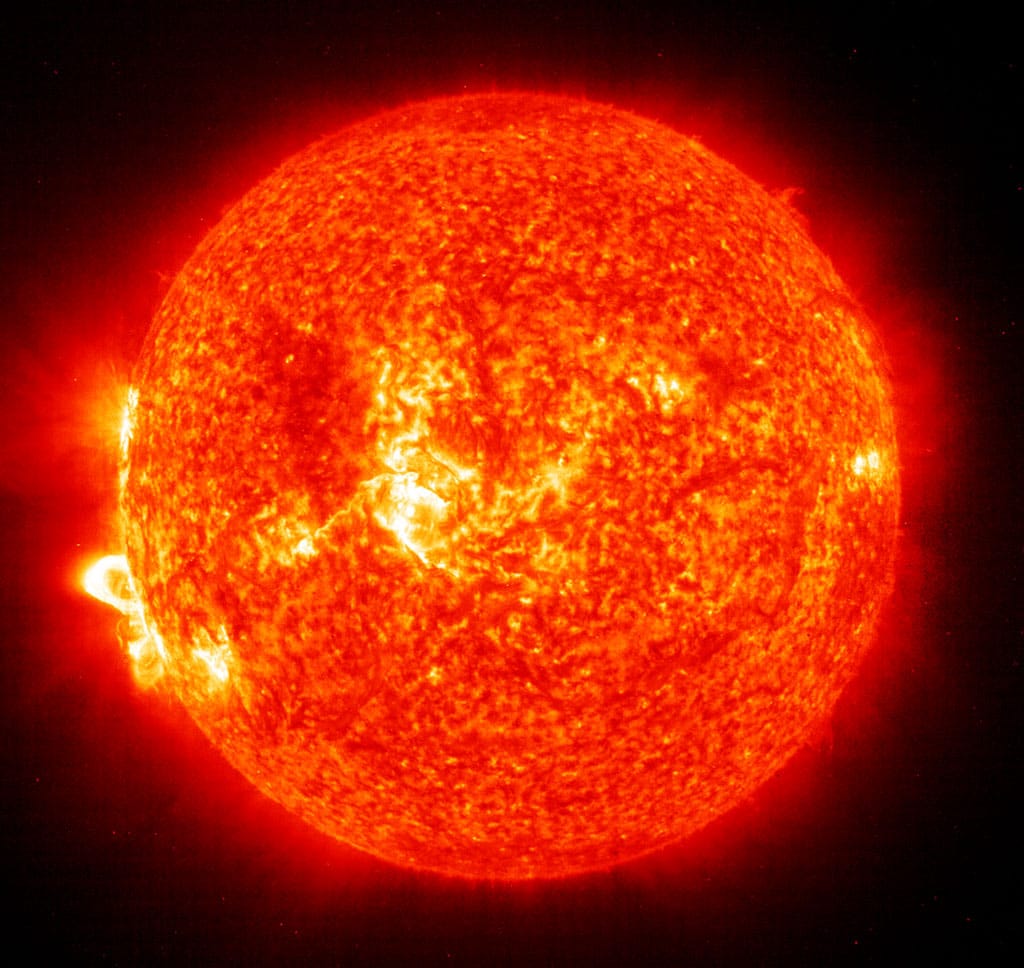
(Possible Question 2: If oxygen is necessary for combustion, then how do the Sun or other stars “burn”? The answer is simple: they don’t. What happens there is nuclear fusion: under immense pressure and heat, hydrogen atoms fuse into helium, releasing vast amounts of energy. The result: no chemical reaction, no combustion, no fire. Sorry 🙁)
And yet, fuel and oxygen together still aren’t enough. A third condition is required: heat. Without sufficient heat, there is no ignition.
Fuel, oxygen, and heat together form the triangle of combustion.

Now let’s return to Possible Question 1: How does combustion happen without fire?
Take the engine of a car. The combustion inside the cylinder is a controlled explosion — an explosion is nothing more than very rapid combustion. Oxygen and fuel combine under a spark of heat, producing energy. That energy moves the car, but no fire appears.
Another example: our own bodies. The food we eat reacts with oxygen in our cells, producing energy.
This is called cellular respiration, a type of controlled, slow combustion. Our bodies “burn” food as fuel, releasing energy that sustains heat, movement, and life itself.
In short: fire, as we usually symbolize it, is not limited to visible flames. It is, at its core, the transformation of matter into energy.
That transformation may take the form of a car engine’s controlled explosion, a smoky campfire, nuclear fusion in the Sun, or the slow cellular “burning” within our own bodies.
What matters is not the method, but the transformation — and the energy released.
So when we speak of the element of fire, what we actually mean is transformation and the energy it brings forth. If we agree on this, let’s keep reasoning:
The fire element, as it manifests in the world, also exists within us. Almost in the same way:
Our Fire
When we allow transformation, energy arises — enabling us to move, to act, and to transform other things. If we manage to keep this cycle in balance, life flows smoothly. But when our fire dwindles or burns out of control, the cycle is disrupted.
How does that happen?
Think of the combustion triangle: fuel, oxygen, heat. If even one is missing, combustion cannot occur.
Now, let’s look at how this triangle translates within us:
1. Fuel = Inner Potential

Is there something inside us ready to burn?
A dream, a passion, a goal, a desire for change?
Why should life excite us, why should it move us forward?
Without anything to ignite, what could we possibly become?
This is the first condition: there must be something to burn.
If your fuel is depleted, your fire may fail to catch even if your circumstances and triggers are in place. Just as we check the gas tank before a long trip, when life seems favorable yet we cannot move, it may be worth checking our inner reserves.
And if we have too much fuel? Then even the smallest spark risks igniting a wildfire. Imagine navigating a crowded city with a fuel truck filled to the brim — a little frightening, isn’t it?
2. Oxygen = Expression, Environment

Fire exists only with oxygen.
A supportive environment, safe relationships, systems that don’t suffocate us, spaces where we can express ourselves.
If oxygen is lacking, our sparks find no room to catch. When we cannot breathe, when we cannot voice ourselves, when our surroundings press in, our fire suffocates. Something inside may want to ignite, but without oxygen in the air, no flame can appear.
And if oxygen is excessive? The fire flares, scatters, and slips out of control. (Remember: the air we breathe is about 78% nitrogen, 21% oxygen, and 1% other gases. If not for nitrogen’s balancing presence, the whole atmosphere would burst into flames at a single spark.)
In human terms: a body and mind stretched too thin, trying to be everywhere, open to everything. Like a flame tossed about by every gust of wind — bright, but easily scattered. Perhaps your sudden flares come from an overabundance of oxygen in your environment.
3. Heat = Trigger / Inspiration / Crisis

If nothing stirs us, if nothing sparks us inside, maybe all we need is a single spark. Sometimes that spark is inspiration. Sometimes it is loss. Sometimes it is the weight we can no longer carry. This is what lights the fire: a stimulus hot enough to push us into motion.
If heat is missing, even with fuel and oxygen in place, nothing ignites. Our potential stays dormant, as if the lighter refuses to strike.
But if heat is excessive, every little thing feels like a spark: a word, a glance, a shift. Suddenly, everything is ablaze. You burn, but you cannot tell how far the flames will spread.
Since we’re reasoning, let’s also recall the different types of combustion we mentioned earlier:
If your car’s engine won’t run — the controlled explosion is missing — it may be because the fuel is gone (fuel), the air-fuel mix is wrong (oxygen), or the spark plug won’t fire (heat).
If you claim, “Ordinary combustion doesn’t concern me, I burn like a star in nuclear fusion,” then remember:
Stars with dwindling fuel collapse into white dwarfs or explode as supernovas. Stars with too much fuel release such overwhelming energy that they make life around them impossible.

And within our own bodies? Recall that cellular respiration is a kind of combustion — technically, an oxidation.
Maybe your way of burning is oxidation: like an apple browning, or iron rusting. Rusting and all oxidation processes are, technically, very slow combustion. Heat is released so gradually that we see no flame — but at the molecular level, the same principles of fire apply: oxygen transforms matter, releasing energy. Don’t dismiss oxidation: gram for gram, it releases nearly as much energy as wood burning — but spread across days or months, it cannot be felt as heat. This is fire’s hidden face.
Maybe your fire element works like this. The fact that it burns differently than others does not mean it does not burn at all, does it?
That is why understanding fire is like learning the language of movement and transformation. Sometimes the issue isn’t whether fire exists, but whether the elements that create it are in balance.
The balance of conditions that allow combustion is always within you. What matters is to find the counterparts of these three elements inside yourself — and discover how to bring them into balance for a burn that is steady, useful, and alive.
So, what can we do for a healthy fire element?
Let’s keep reasoning in symbols.