
Balance of Earth
The process begins with recognition.
What is the current state of my soil? Is it full of stones, hardened and barren? Or has it been waterlogged, turning into a swamp?
The better you can describe its state, the easier it will be to shape it.
The second stage is to discover why it is in this condition.
After harsh winters, it may have frozen; perhaps, being close to a river, it was flooded; if it is by the sea, salt may have dried it out; maybe a neighbor cleared stones from their own field and threw them into ours; maybe drought struck… There can be hundreds of different reasons.
Finding the reason is the most important step toward finding the solution.
The following stages are more closely intertwined, and their order can vary depending on the person or situation.
Stage 3 is to decide on your purpose: What is it that I primarily want to do with my soil? What has vital priority for me? But making one single holistic decision is not mandatory. You may choose different purposes. You might build a shelter on one part of your land, sow seeds on another, and leave a different part fallow.
Once you’ve decided on your purpose—how you want to shape your soil—you can move on to Stage 4.

Is your soil suitable for your purpose? Every purpose carries its own requirements. If you want to build a house, your soil needs to offer a foundation that will hold well; if you want to sow seeds, the soil must contain the right components for the plants’ needs.
Stage 5 is to decide on your intention. Am I content with the current state of my soil? Do I want to change it? Or let’s not always think of the negative. Perhaps you are lucky, and your soil is just as you want it from the very beginning. Still, the same question arises: Am I satisfied with this? Do I want to keep it as it is?
If your answer is yes, Stage 6 awaits you: What tools and methods do I need to bring my soil into alignment with my purpose?
If you want to build a house but your soil is too loose, you may need to strengthen it with deep piles—like the houses of Venice or Dubai. If you want to farm but your soil is too hard, you may need to plough it with strong tools, to become the agent that allows life to reach it. Around the Nile, fertile soils enabled thousands of years of agriculture, but in Europe, farming spread only after the invention of the heavy plow. Speaking of the Nile, if your land is under water, you may need to build dikes to protect it. In the end, making your purpose and your soil’s condition compatible is your task.
Once you achieve this harmony, the remaining task is to maintain balance. Conditions may change—this season may be drier, the next wetter. Rivers may flood and create torrents, or life may surprise us with many other challenges.
But if we have fulfilled the above stages sincerely and continue to care for our soil, restoring balance will not be such a difficult process.
We should also add this: You don’t always have to build or plant something on the soil. You can also make things from the soil itself—water jugs, amphorae, pots, vessels, and so on. Yet the same processes still apply.
But don’t let these stages and processes intimidate you. In fact, this entire process is nothing but the very struggle of life itself.

When you prepare fire, a single spark sets it ablaze. You can immediately tell whether it is burning. If it’s getting out of control, it spreads quickly; if it is dying down, the smoke increases. Fire informs you quickly of its stages. If you pay a little attention, you see what’s wrong—the error is relatively easy to spot.
Earth, however, unfolds over time; it is habit, it is discipline. You prepare your soil as usual, everything seems fine, you sow your seed, it sprouts—but then may decide not to grow further. Identifying the soil’s deficiency often takes time, because it doesn’t give direct clues. Only after you see what goes wrong do things make sense. You look at the plant you’ve sown—it tells you which mineral is missing.
Understanding the earth element within yourself requires similar effort. You look at your habits, you observe your daily routines. Sometimes there seems to be no problem. You must look instead at the goals you are trying to cultivate in your own soil. If they are not growing, only then do you realize that something is missing—or in excess.
Not every flower grows in every soil. Sometimes you must accept that too. Sometimes you change the flower, sometimes the soil.
At times the problem is obvious. If the soil is rock-hard, you must till it, loosen it. It requires effort: digging, ploughing, hoeing—labor. The more you work it, the more fertile it becomes; if you plant, it nourishes you, but it also binds you to itself. It can captivate you, but also demand all your time. You can dig deep into your inner soil with the same tools, but you must first accept that this is a long-term, effortful endeavor. If you pour all your energy at the start out of excitement, but later neglect it, you waste both your soil and your labor.
As you reap rewards, you may want to work even more, perhaps even looking down on those who leave their soil uncultivated. But as always, balance is essential. Sometimes if you go too far, you must also know how to step back.

Earth does not like haste. You cannot irrigate a field by diverting a river over it. Ideally, it wants water drop by drop—as if each time you are sending down a personal rain just for it.
It demands care, awareness. It does not directly tell you how much water it needs. It expects you to observe and learn.
But never forget this: when it comes to earth, you cannot plan everything. In fact, you should not. You must learn to do what you can, and then let time do its work.
Sometimes earth will break your enthusiasm. Just when you thought you planned everything correctly, it fails from an unexpected angle. At this point, whether you give up or continue is itself the test that earth poses for you.
When fire flares up uncontrollably, it shows its power; when it dwindles, it fills the air with smoke.
Earth reveals itself over time. In learning the earth, you learn yourself.
You will learn how to balance your soil yourself, but you must also know that not everything needs to be discovered on your own. If something is going wrong, there is no harm in trying other people’s methods instead of stubbornly insisting. If humanity had always clung to only one method, it would probably have gone extinct long ago. On the contrary, to increase yield, people have always tried new methods. They planted some crops alone, others together. One year one species, another year another. They noticed a neighbor left their land fallow and then reaped better crops the next year, and they imitated them. Sometimes they harvested early, sometimes they let crops go to seed. Sometimes events unfolded by pure chance—or what seemed like misfortune became fortune.
Once, someone couldn’t harvest grapes because they were ill, and snow fell on them. They thought the crop was lost, but discovered it had reached a completely new taste.
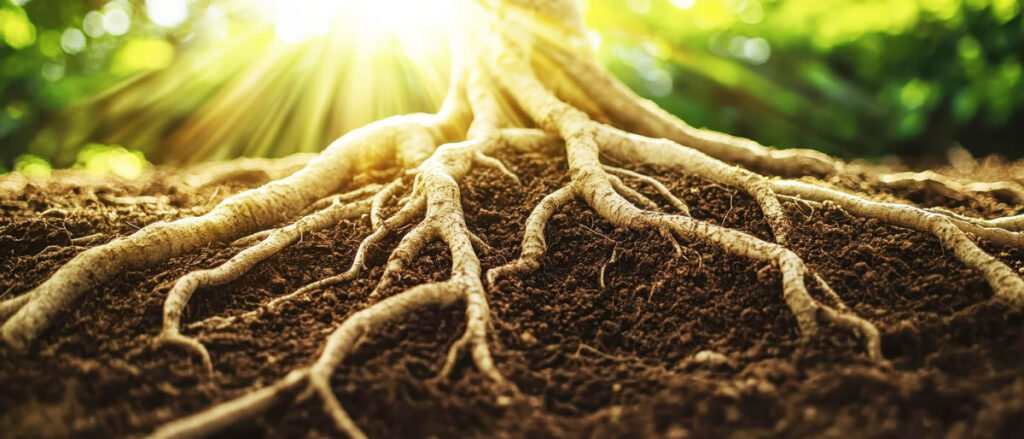
Earth may sometimes seem resistant to change; anything with deep roots takes time to transform. But once earth begins to change, it can usher in a new age.
This is the paradox: earth is, in truth, transformation itself. A seed sprouts, feeds from the soil, clings to it, takes root, rises, and as its roots grow strong, they hold the soil together and protect it from outside forces. Then the plant reaches the end of its life cycle, and returns to the soil once again. For the discerning eye, there are countless lessons here.
When you feel lost, earth offers you a home. Earth is Gaia, the Life-Giving Mother. She protects you, gives you belonging. She does not question whether you come to rest for a moment or to stay for a lifetime. She gives you a room you can always return to.
Sometimes you cannot understand without contact. Earth offers you healing. You must be willing to get dusty, to sink into mud, to be pricked by thorns. Because if you show effort, earth will offer you, within your own desert, an oasis; while everything around is scorched by barrenness and stones, it will give you rose gardens. If only you know how to give your labor with patience.