
Balance of Fire
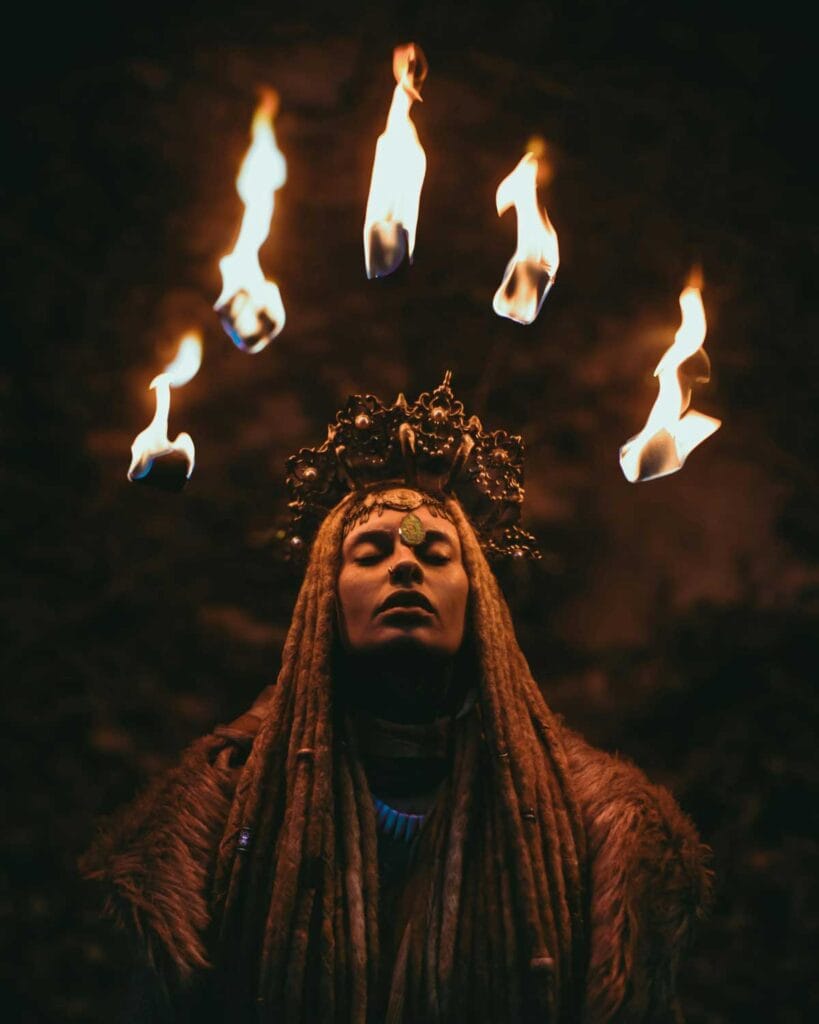
Let’s start with fuel.
What was fuel again? Our inner potential: dreams, passions, goals, desires for change.
At some point in life, all of us have chosen a kind of fuel.
For example, when we build a campfire, what do we pay attention to in the wood we gather?
- Size: very large pieces don’t burn on their own; they need smaller ones to support them.
- Moisture: wet wood is hard to light, fills the space with smoke.
- Type: pine catches easily but burns quickly; oak takes effort to catch but burns long and strong.
Anyone who used to heat with a stove knows: wood burns one way, lignite coal another, and coke coal in a way entirely its own.
So, when we fill our inner reserves, we must choose the kind of fuel that suits the fire we want to create. We shouldn’t fear reviewing and testing our dreams, passions, and goals every day. Just as we check the fuel gauge before a journey, we should never stop checking the amount and balance of our inner reserves.
Like damp wood, potential hidden deep inside for too long may not ignite easily. Maybe we need to bring it into the open, let it dry, or kindle it with smaller fires.
And if our goal is too big, perhaps it needs to be supported and strengthened with smaller goals first.
But choosing the right size, moisture, and type of wood isn’t always enough for a good campfire. The way we place them matters too. Because fire needs air to burn. The logs must allow air to circulate between them. Likewise, our inner reserves should not be heaped mercilessly one on top of the other. They need space to breathe, to stand in the right place. Too much distance, however, and they won’t light each other. Close enough to ignite, open enough to breathe.
What else should we do — and perhaps even more importantly, what should we avoid?

We must not overdo it. We don’t pile a ton of wood for a campfire. We don’t need it, it wastes our time and energy to gather, and it’s dangerous. Growing our potential is good, but as with everything, excess can harm. And even if we did gather it, storing it would be difficult, carrying it exhausting, keeping it dry a burden.
We must remember that we are responsible for our fire. This means drawing boundaries. Not by locking it up, but by ensuring its surroundings are safe, non-flammable, a space where fire cannot spread unchecked. Knowing your fire as it is now is not enough — you must also foresee its largest possible state and prepare accordingly. Thousands of forest fires in the world are born from people failing to take this responsibility.
By learning to know your fire, you also learn how to strengthen it when needed, and how to restrain it when necessary. If you’ve ever attended workplace safety seminars, you may have had some version of this training.
Remember, we began by saying your fire element is unique.
If your fuel is tinder, you cannot treat it the way someone else treats oak. You must be more careful, more hands-on — just as someone else must learn to be more patient.
But there is one common rule: none of us should pour gasoline on our fire. Our aim is to keep it burning steadily so it sustains life. Otherwise, what we end up with is nothing but a dangerous explosion.
That is why discovering the nature of your fire is crucial. If you pour water on burning wood, it may go out, producing much smoke — but it may also help you control it. If oil is burning, though, pouring water makes it worse. That’s why fire extinguishers contain different agents, why firefighters intervene with different tools for different flames.
Now to the second element: oxygen, the environment.
We already touched on this when we spoke of air circulation, but the truth is: the environment matters just as much as inner potential. This knowledge has played a central role in human civilization itself.
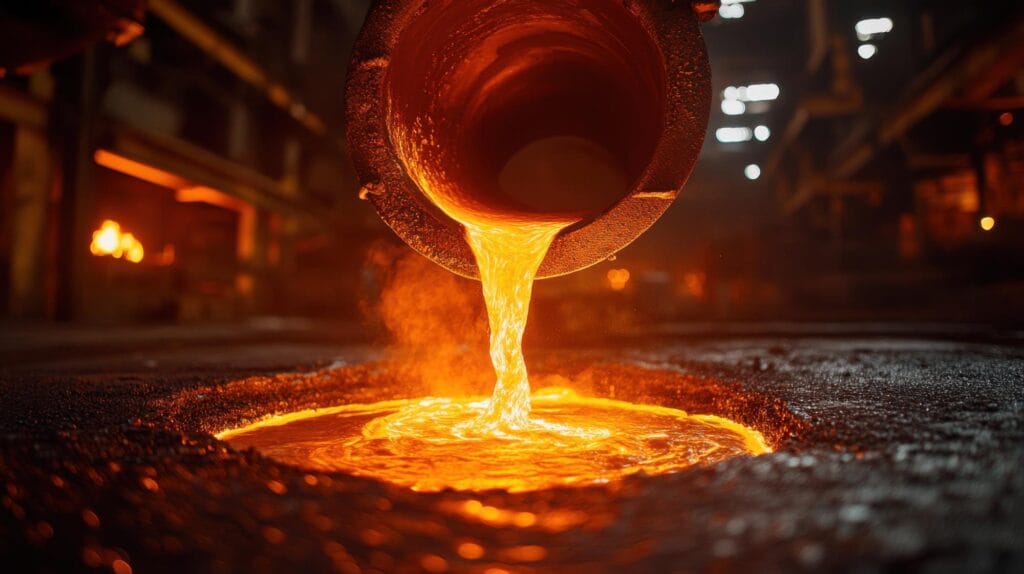
Do you know why history has “ages” named after metals — the Bronze Age, the Iron Age, the Copper Age? Were those the times when those elements were discovered? No. They were the times when those elements became usable. The difference is this: to use a metal, you don’t just find it. You must smelt it — heat it above its melting point and shape it. And to reach those temperatures, it’s not enough to have the right fuel and combustion system; you also need a structure that can contain and withstand that heat.
Likewise, if you want to use your inner potential to its fullest — to raise your fire to a higher temperature without losing control or causing harm — you must build a structure strong enough to hold it.
Your environment continuously interferes with the balance of your fire element, because oxygen levels are never constant. You cannot adjust once and then leave it. You must constantly fine-tune. Sometimes the content of the air changes. Sometimes the wind shifts. Sometimes storms rage. Sometimes rain pours directly onto your fire.
Whatever happens, protecting your fire is your task. And these balancing efforts are not heavy burdens. They are functional exercises that help you know your fire more deeply, prove to yourself that you can keep it alive in every condition.
Finally, the third element: Heat = Trigger / Inspiration / Crisis.

Did you remember to bring a lighter to camp? If not, what do you do? How many of us actually know how to rub sticks together or strike stones for sparks? Of course, the best is to be able to create our own inspiration in any condition. We can learn how to spark fire and practice until we master it. Some of us may prefer creative ways — like lighting with a magnifying glass.
Those who know, light their fire. And those who don’t? They may still find a few matches forgotten in their bag. Sometimes inspiration waits in a place you haven’t looked in a while.
Even if we don’t know how to spark, we can still keep tools nearby. We can tuck a box of matches in every bag, check our car battery often. Once we discover what inspires us, it’s wise to remember it, to keep it close for the moment we’ll need it. For some, the trigger is emotional. For some, a note left as a reminder. For some, a piece of music. For some, learning to turn a crisis into an advantage. Whatever it may be, finding your spark and keeping it within reach is essential.
And if we don’t know how to spark, and our triggers are nowhere near, we can still keep the fire from dying completely. Even when inspiration is absent, the fire remains ours. We must keep moving, allow change and transformation to continue slowly. If we stop, the fire dies, and smoke blinds the air. But if we preserve even a small flame, we can still feed it with our inner reserves over time.
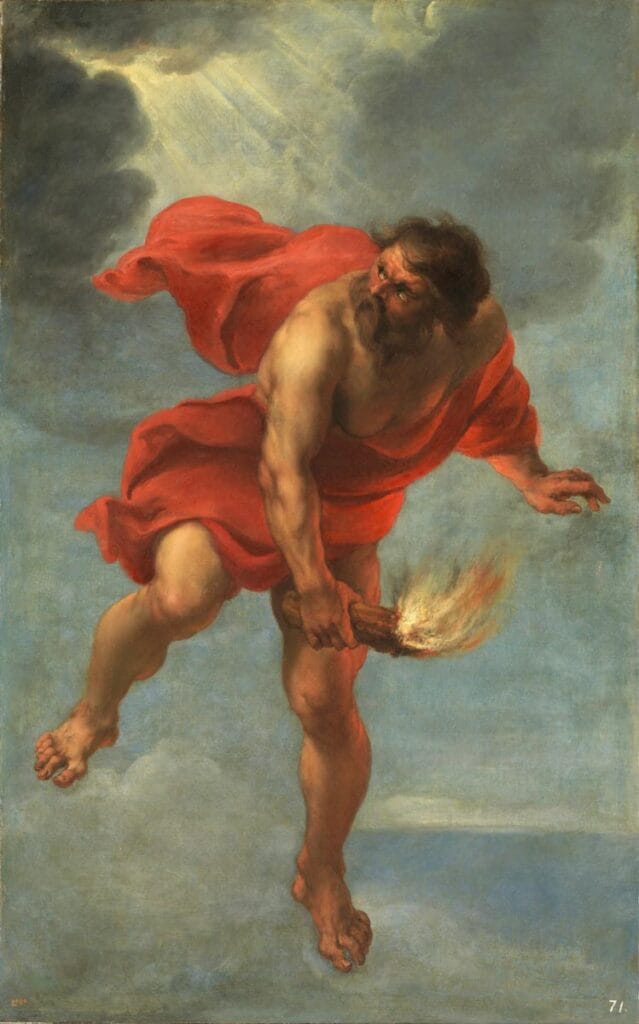
What if we’re caught in unexpected rain, and the fire goes out? Even then, it’s not the end. We can borrow from other fires. The world is not so bleak — there are still people who hand over a lighter, who rush to help a stranded car. Taking inspiration from others is no shame. The only caution is not to drain someone else’s fire, nor to let borrowing become dependence. Using it in times of need is natural — even Prometheus once stole fire from the gods to give to humans. Nothing shameful in that. And yet, creating our own spark and guarding our own flame remains the best path.
Sometimes, of course, sparks don’t come by choice. Lightning strikes from the sky, setting trees ablaze. Perhaps this was humanity’s first meeting with fire. Or a faulty wire catches flame. Life doesn’t always flow smoothly; crises do appear. The important thing is to let those moments move us, without letting them consume our lives in wildfire.
A balanced fire forms the core of our life force and movement. If we learn to ignite it, feed it, and keep it under control, it will give back to us in the most beautiful ways.